Messy input row
- order_id
- ORD-100777
- order_date
- 31/02/2025
- quantity
- -1
- phone
- withheld
This example uses a synthetic UK orders dataset, not client data. It shows the difference between a raw export, the cleaned output, the rejected rows, the flagged rows, and the signed delivery package.
The point is not just changing formats. The service separates usable rows, rejected rows, and rows that need operator/client judgement.
Rows that satisfy the agreed schema and policy continue into the cleaned dataset. Sensitive fields follow the configured keep, mask, hash, or remove policy.
Rows with blocking issues are separated into rejects with machine-readable and plain-English reasons, instead of silently polluting the clean output.
Ambiguous records can be retained only with an operator/client decision and audit trail, so repeat runs do not hide judgement calls.
The synthetic run produced the same delivery structure used for a paid-client workflow: clean data, quality files, reports, manifests, and signature evidence.
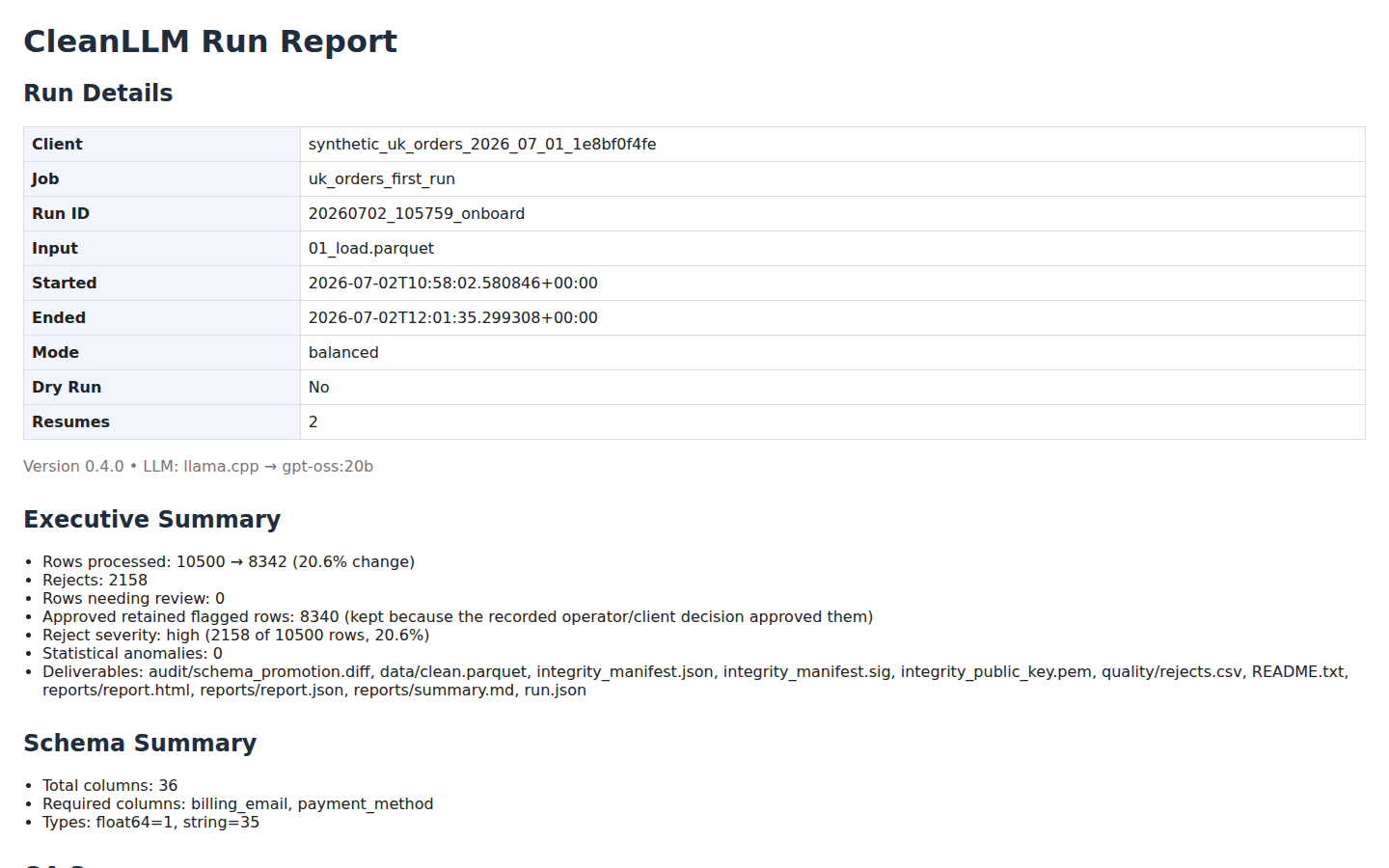
These files are intentionally tiny extracts for the website. They demonstrate the categories of output without exposing live client data.
The value is repeatability: the next weekly or monthly export can be checked against the same approved rules instead of relying on someone remembering every manual edit.
Send a short description of the recurring file, the manual fixes, and the outcome you need. If the file is a fit, Audit Ready Data will issue a signed upload link.